
Start Ecommerce Without Inventory
Our Blogs
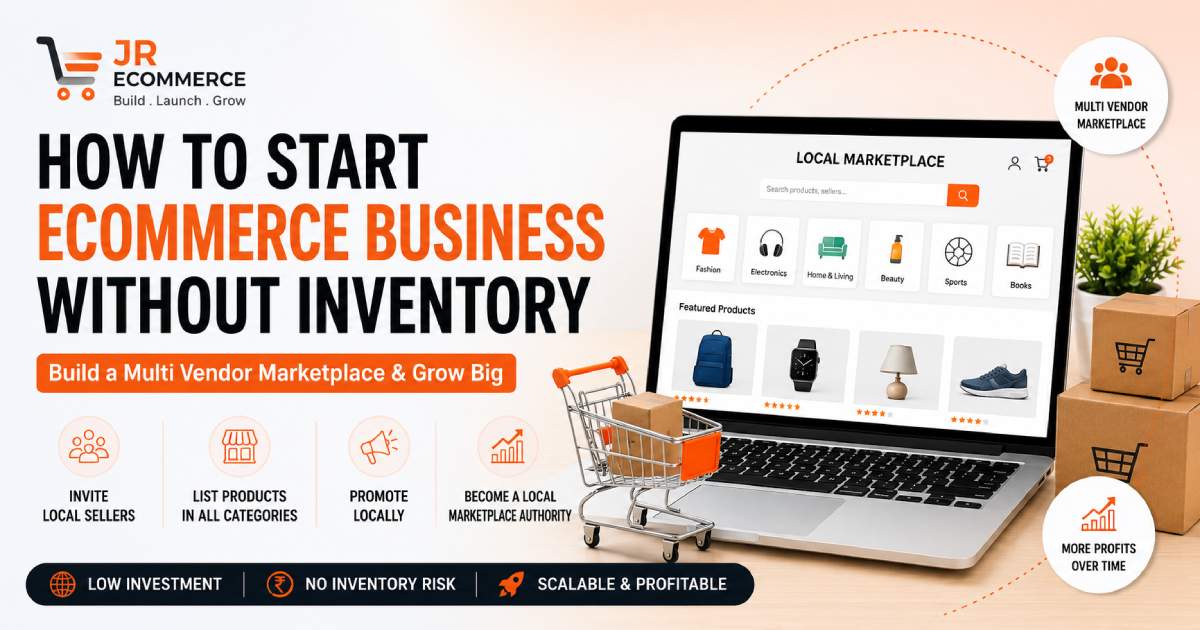
How to Start an Ecommerce Business Without Inventory in India
Starting an ecommerce business usually sounds expensive because many people assume they need a warehouse, bulk stock, packaging setup, and a large investment before making their first sale. But today, you can build a profitable ecommerce business without holding inventory by creating a local multi-vendor marketplace.
Instead of buying products yourself, you can invite local shop owners, wholesalers, manufacturers, and sellers to list their products on your ecommerce website. This model allows you to launch quickly, offer a wide product range, and build a trusted local marketplace brand with minimal investment.
Build a Multi-Vendor Ecommerce Marketplace
One of the easiest ways to start an inventory-free ecommerce business is by using a multi-vendor plugin like Dokan Lite with WooCommerce.
A multi-vendor marketplace works similar to large ecommerce platforms where multiple sellers can register, upload products, manage orders, and sell through a single website.
Instead of managing stock yourself, vendors handle their own products while you manage the platform, branding, marketing, and customer experience.
How a Local Multi-Vendor Marketplace Works
A multi-vendor marketplace allows you to run an online shopping platform without purchasing or storing the products yourself. Sellers manage their own products and fulfil customer orders, while you manage the marketplace, customers, marketing, and commissions.
The process is simple:
-
Vendors Join Your Marketplace
Local shops, wholesalers, manufacturers, and other sellers register on your website and add their products, prices, stock, and product information. -
Customers Place Orders
Customers browse products from different sellers and place orders through your marketplace, just like they would on a regular ecommerce website. -
Vendors Receive Their Orders
Each vendor can see the orders containing their products through their seller dashboard and prepares the products for dispatch. -
Vendors Handle Shipping
Sellers pack and dispatch their own products using their preferred courier or shipping service, such as Shiprocket or another logistics provider. This means you do not need to maintain your own warehouse or delivery network. -
Customers Receive Their Products
Depending on the sellers involved in an order, products may be shipped separately and may arrive at different times. Customers can receive tracking information where available. -
You Earn Commission
You can charge a commission on every successful sale made through your marketplace. Vendor earnings and marketplace commissions are recorded separately so that sellers can be settled according to your marketplace policy.
This model allows you to focus on growing the marketplace, attracting customers, onboarding sellers, and promoting products while each seller remains responsible for fulfilling and delivering their own orders.
This approach helps you:
- Launch without buying inventory
- Add products from multiple sellers
- Expand categories quickly
- Generate commission income
- Build a scalable ecommerce business
Start With Local Vendors and Shops
The biggest advantage of a local marketplace is trust and faster business growth within your city or region.
You can approach:
- Local clothing stores
- Grocery shops
- Gift stores
- Electronics dealers
- Furniture sellers
- Cosmetic shops
- Handmade product sellers
Many local businesses want online visibility but do not know how to create ecommerce websites or manage digital marketing. Your platform becomes their online selling solution.
You can offer them:
- Online product listing
- Payment collection
- Local marketing support
- Seller-managed shipping
- WhatsApp order support
- Social media promotions
Add Multiple Product Categories
A multi-vendor ecommerce model becomes stronger when customers can find different types of products in one place.
You can gradually add categories like:
- Fashion and clothing
- Grocery and essentials
- Mobile accessories
- Beauty products
- Home and kitchen items
- Footwear
- Toys and gifts
- Electronics
Promote Your Marketplace Locally
Since your marketplace focuses on local sellers, local promotion becomes very effective.
You can promote your ecommerce platform through:
- Facebook and Instagram ads
- WhatsApp marketing
- Local influencer promotions
- Google Business Profile
- Posters and flyers
- Local Facebook groups
- YouTube short videos
When customers see products from nearby trusted sellers, they feel more comfortable ordering online. This helps your marketplace build local authority faster compared to starting a single-product ecommerce store.
Build Authority as a Local Marketplace
As more sellers join and more products are listed, your website starts becoming known as a trusted local marketplace.
This creates several long-term advantages:
- Better Google search visibility
- More repeat customers
- Stronger brand recognition
- Easier vendor onboarding
- Higher order volume
- Increased commission earnings
Introduce Your Own Products Later
One of the smartest advantages of this model is that you can introduce your own products gradually after understanding market demand.
By analyzing:
- Best-selling products
- Customer interests
- High-demand categories
- Price trends
- Vendor performance
You can start launching your own private-label or higher-margin products.
This allows you to:
- Earn vendor commissions initially
- Reduce risk in the beginning
- Use marketplace traffic for your own products later
- Increase profits over time
Why This Model Works for Beginners
This business model is ideal for beginners because:
- Low investment required
- No warehouse needed initially
- Faster product expansion
- Easier business validation
- Scalable long-term growth
- Multiple income sources
Final Thoughts
Starting an ecommerce business without inventory is no longer difficult. By building a local multi-vendor marketplace using tools like Dokan Lite and WooCommerce, you can create a scalable ecommerce platform without buying stock upfront.
The key is to focus on local sellers, build trust within your region, promote consistently, and gradually expand product categories. As your marketplace gains authority, you can slowly introduce your own high-profit products and turn the platform into a powerful long-term ecommerce business.
Want us to build your marketplace using WooCommerce + Dokan?
Start StoreReady to Launch Your Ecommerce Store?
Get your WooCommerce store professionally setup in just 5–7 days. No monthly platform fees, full ownership, and everything configured for you.
Start Your Online Store